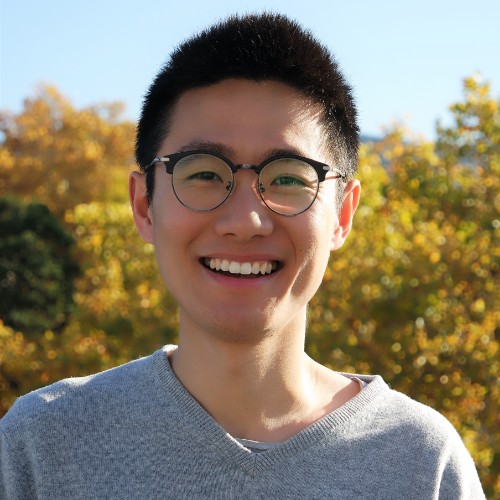
About me
Stumbling into biology as my major during Bachelor’s by accident (literally), I felt, among all the subjects in biology, bioinformatics might be a good match as I’d been glued to my computer anyway.
Being not entirely convinced that I could make a living on this and also wanna to see more excited world out there, I left my hometown Shanghai and went for master’s studies in Freiburg, Germany.
Loving the city and having some luck to get a stipend, I stayed for a PhD. Working day and night on the bench and playing with fruit flies, I finally realized that it is indeed possible (and nicer) to do bioinformatics for a living.
Bioinformatics has become an increasingly multidisciplinary field. A good bioinformatician needs to combine:
A) A strong understanding of biology. For a PhD student, it’s already challenging to grasp the history, trends, and key questions within a single biological field—let alone across multiple ones.
B) Solid programming and scripting skills. This mainly includes NGS and downstream analyses in last decades but also broader data processing. While some people distinguish bioinformaticians from data scientists as “upstream” and “downstream” roles, this separation isn’t always necessary.
C) Engineering and DevOps skills. These are essential for robust works, FAIR principles, CI/CD systems and eventually also make life and research easier.
Fortunately, I’ve had the opportunity to develop all three aspects through my previous experiences.
As a Bioinformatician at the Max Planck Institute for Biology of Ageing in Cologne, I worked on various exciting research projects and gained extensive experience in both biology and programming.
At Julien Gagneur’s lab at the Technical University of Munich and within the German Human Genome-Phenome Archive (GHGA), I serve as a main developer of two open-source bioinformatics workflows, which greatly strengthened my engineering and DevOps skills in a short time.
I’m excited to contribute further to research using my bioinformatics expertise — and to explore how these skills can be combined with emerging trends in AI.